CLAIM YOUR 22% OFF →

Thoughts on the Evolution of Automotive Aftermarket Electronics: Challenges & Innovation Opportunities for Portable CarPlay Monitors, PND & Car Infotainment
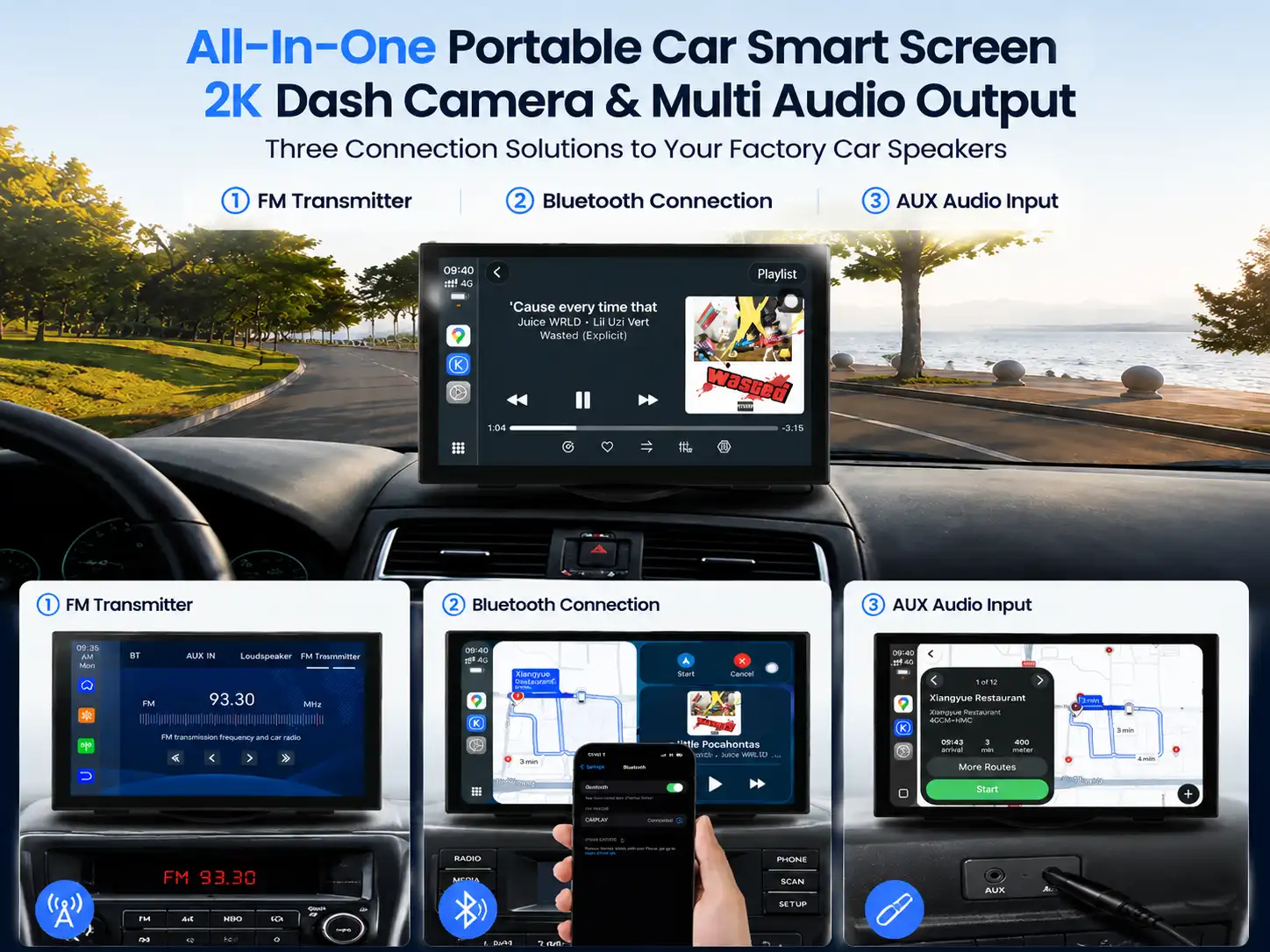
With nearly 20 years immersed in the automotive aftermarket electronics industry, I’ve witnessed every wave of transformation sweeping this consumer electronics vertical. From standalone PND portable navigation devices to wireless CarPlay portable smart screens, the aftermarket auto electronics sector has constantly reshaped itself alongside advances in automotive manufacturing and consumer tech. Today I’d like to share in-depth industry insights, market risks, untapped growth opportunities, and core product development logic from a hardware manufacturer’s perspective.
The automotive aftermarket electronics space remains one of the most fiercely competitive consumer electronics markets globally. Low entry barriers lead to a fragmented landscape filled with premium international brands, mid-tier manufacturers, and low-cost generic suppliers. While every player survives with its own business model, product strength is the core competitive edge—and innovation is the foundation of great products. Our ultimate goal as industry practitioners should be delivering truly user-centric hardware that carries genuine emotional value, not just hitting revenue targets.
We live in an era of information overload and product oversaturation. Practical, user-friendly aftermarket car electronics have become rare gems. A standout device does not merely satisfy basic driving demands; it fulfills drivers’ spiritual pursuit of safer, more comfortable road trips. Great automotive accessories are built for users, not profit KPIs. They act like a quiet, reliable companion: harmonious with drivers, unobtrusive to the vehicle interior, and maintain consistent value throughout their full service life.
The Expanding Market of Aftermarket Car Infotainment & Driving Safety Gear
Safe, enjoyable driving is a permanent consumer demand, which has spawned a vast range of aftermarket automotive electronics solutions. The industry has evolved through multiple generations of core products:
- Early stage: Car DVD players, wired PND navigation units, reverse parking sensors
- Recent mainstream: Dash cameras, streaming rearview mirrors, aftermarket head units, portable wireless CarPlay screens
- Niche lifestyle accessories: Car air purifiers, vehicle vacuum cleaners, multi-port wireless car chargers
Even as OEM factory-installed vehicle configurations grow richer, factory infotainment systems remain conservative and slow to iterate. Automakers cannot fully cover every personalized driving demand. Vehicles also hold long service lifespans, so car owners continuously upgrade aftermarket gear to upgrade their daily driving experience. Despite the huge existing market volume for aftermarket electronics, the industry now faces two critical existential challenges.
Challenge 1: Smartphone Disruption Reshapes The PND & Car Multimedia Market
The universal adoption of smartphones already eliminated the traditional standalone PND market years ago. Built-in mobile navigation, streaming media, and audio players replaced dedicated car audio and GPS hardware. Apple CarPlay and Android Auto further revolutionized vehicle infotainment (infotainment) via native voice assistants, drastically lifting the in-car digital experience. Smartphones deliver unmatched hardware performance and software ecosystems, compressing the living space for generic aftermarket car electronics.
However, every drawback creates new demand. While phones excel at software, they cannot fully adapt to all vehicle scenarios—opening a brand-new sub-market for phone-centric aftermarket accessories: dashboard phone mounts, multi-port car power supplies, and the fast-growing portable wireless CarPlay monitor segment.
Three major product lines now dominate the CarPlay aftermarket boom:
- Full embedded aftermarket head units with built-in CarPlay & Android Auto
- Wireless CarPlay adapters that convert factory wired CarPlay to wireless
- Plug-and-play portable wireless CarPlay smart screens (our core product category, e.g. Model 803W)
Smartphones closed the door on old-school wired PND navigation systems, yet mobile operating systems opened a new window for portable car display hardware. This new generation of portable CarPlay screens stands worlds apart from legacy WinCE-based PND devices with limited preloaded maps, tiny panels and single functionality.
Portable wireless CarPlay monitors leverage the full mobile app ecosystem: real-time online navigation, large high-brightness IPS touch screens, seamless music streaming, and native Siri/Google voice control. Many models integrate built-in loop-recording dash cams, delivering massive value to drivers of older vehicles without factory smart systems.
That said, the current generation of portable CarPlay hardware still carries critical flaws. Most retain outdated industrial design inherited from decade-old PND devices, with unchanged hardware interfaces and even degraded user experience on key accessories. In short, these are “old bottles filled with new wine.” Older consumers who previously used classic PND units may feel mildly refreshed, yet mainstream drivers exposed to cutting-edge new energy vehicles and modern smart hardware find these portable screens unappealing. While portable CarPlay monitors improve basic navigation and media functions, they fail to match the automotive industry’s rapid design evolution. Manufacturers only upgraded core functions without optimizing form factor, ergonomics and in-car integration—trapping the aftermarket electronics sector in outdated low-cost generic design logic, which explains sluggish domestic sales of such products.
Challenge 2: Rise of New Energy Vehicles Shrinks Traditional Aftermarket Stock Market
Global green energy policies, AI development and the rise of Chinese domestic EV brands have triggered a full automotive industry revolution. Modern vehicles—gas or electric—now come standard with premium interior electronics, ADAS driving assistance and fully featured factory infotainment systems, with over-sufficient hardware performance comparable to flagship smartphones.
This trend drastically cuts aftermarket demand for new car buyers, leaving only shrinking stock markets of aging vehicles. Cut-throat low-price competition in a declining mature market is not a sustainable long-term strategy. Yet every crisis creates new growth levers. The key industry question becomes: how to tap incremental demand beyond older cars and capture new-vehicle aftermarket opportunities.
Aftermarket electronics are not dying—only stagnant, uninnovative hardware is fading away. The only viable long-term path is orthodox innovation: balancing practical driving needs with creative, differentiated design. Xpeng and Xiaomi EVs set a powerful benchmark for this shift: factory pre-installed dedicated mounting slots, expandable ports on central screens, and official third-party accessory ecosystems. Aftermarket manufacturers should follow this blueprint to develop non-destructive, innovative add-ons compatible with brand-new OEM vehicles.
Many factory dash cams deliver blurry footage and limited functionality; aftermarket dash cams can evolve beyond accident recording to add creative travel features. Other untapped niche demands remain unsolved: in-car multi-device charging, interior storage optimization, road noise reduction, vehicle air purification and more. Premium specialized aftermarket products already prove this logic: Tesla dedicated dashboard displays, multi-function docking stations and ergonomic phone mounts win consistent market recognition.
Overall, the aftermarket automotive electronics industry is evolving far slower than the global vehicle sector. Modern cars update as fast as consumer electronics, with continuously upgradable native vehicle software, turning automobiles into fully digital devices. This transformation brings unprecedented challenges—and equally massive opportunities—for aftermarket hardware suppliers. Manufacturers must pivot from low-cost functional replication to user-centric, scene-driven innovative design to capture next-wave market growth.
Core Industry Conclusion
- Product innovation, not low-price competition, defines long-term brand survival in auto aftermarket electronics
- Portable wireless CarPlay screens and PND hardware must break outdated legacy PND design limits to attract mainstream consumers
- The future aftermarket growth engine lies in incremental new-EV accessories, not just replacement hardware for aging cars
- Emotional user value and seamless vehicle integration are the highest standard for automotive accessory development
Call to Action (Boost Comments & B2B Inquiries)
I’m eager to exchange insights with fellow auto aftermarket manufacturers, distributors, auto modification shop owners and hardware R&D specialists. What pain points do you observe in today’s portable CarPlay monitor & PND market? What innovative aftermarket product categories do you believe hold the biggest growth potential in the EV era? Drop your thoughts in the comment section below.
If you are a global distributor or brand seeking high-quality portable wireless CarPlay monitors, wireless reverse camera kits and aftermarket car infotainment hardware, feel free to send me a direct message for product catalogs, samples and OEM customization solutions.